Wholesale planning for the Lit Whip Original 3.3L / 2,000G steel tank, SKU 610840042094, with case, pallet, receiving, and storage guidance.
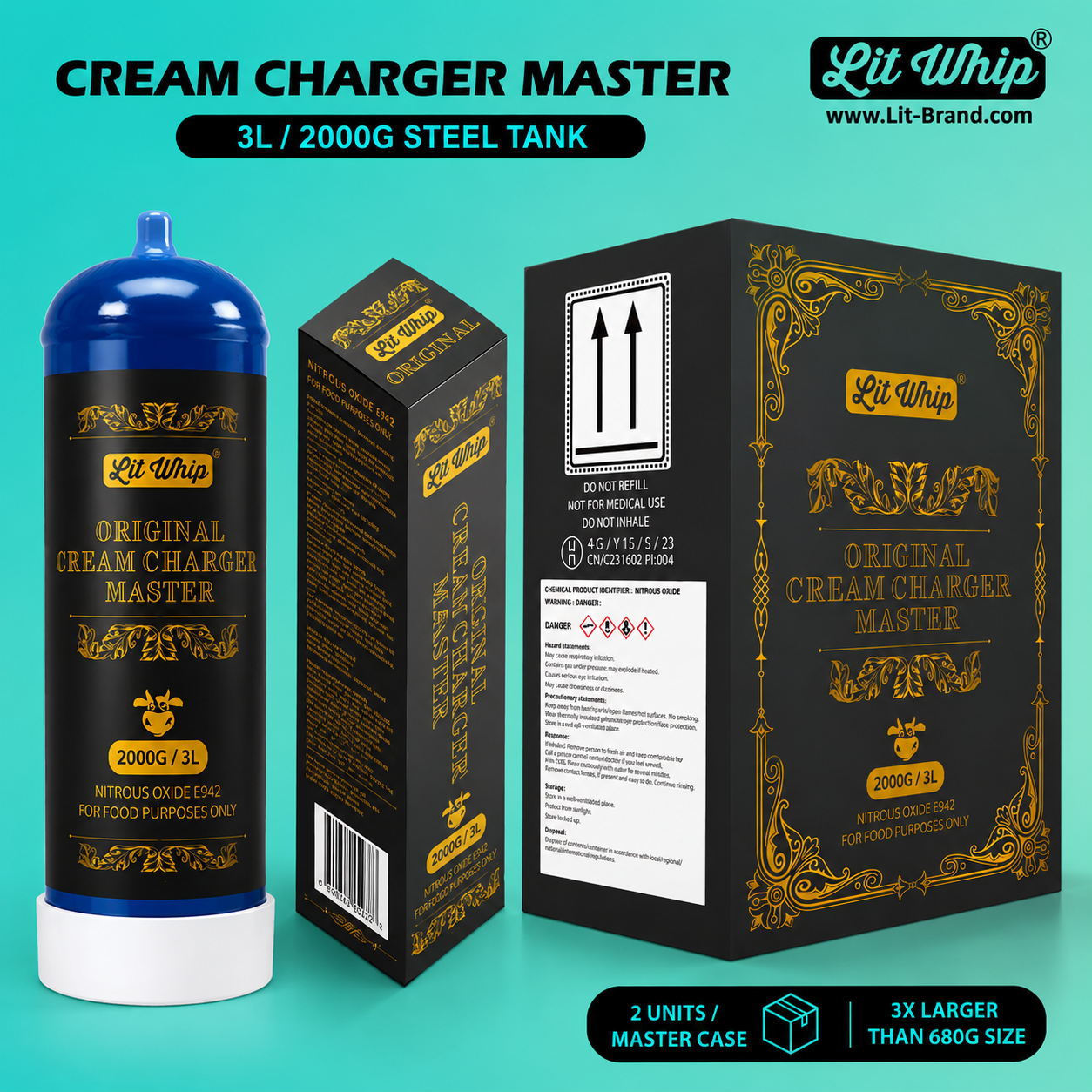
A reliable wholesale process starts with an accurate record for every product you purchase, receive, store, and sell. The Lit Whip® Cream Master Tank — Original Steel, 3.3L / 2,000G is a separate item with its own SKU and pack configuration. Recording those details consistently helps purchasing, warehouse, sales, and customer-service teams work from the same information.
This resource is dedicated to the 3.3L / 2,000G Original steel format. It gives commercial buyers a straightforward framework for documenting the SKU, planning case and pallet quantities, preparing a receiving process, and managing inventory responsibly.
Product profile: Lit Whip Original steel 3.3L / 2,000G
The approved product record is:
Lit Whip® Cream Master Tanks — Original Steel, 3.3L / 2,000 Gram
SKU: 610840042094
Pack: 2 units per case
Pallet: 84 cases per pallet
Always include the 3.3L / 2,000G capacity, steel construction, and Original designation when you create purchase orders, product records, warehouse labels, or catalog descriptions. Avoid using a broad “Lit Whip tank” label that could be confused with another size or configuration.
A standardized internal description can read:
Lit Whip® Cream Master Tank — Original Steel, 3.3L / 2,000G, SKU 610840042094, 2 units per case.
Build a complete SKU record
A detailed SKU record gives every department a shared source of truth. Buyers can verify they are ordering the intended product, while receivers can compare labels and quantities against the purchase order. The warehouse can assign an accurate storage location, and sales teams can refer to confirmed details rather than assumptions.
Maintain these fields for SKU 610840042094:
- Full product name, including Original Steel.
- SKU: 610840042094.
- Capacity: 3.3L / 2,000G.
- Case pack: 2 units per case.
- Pallet configuration: 84 cases per pallet.
- Inventory unit of measure for cases and individual units.
- Assigned storage and pick locations.
- Current supplier and manufacturer documentation.
Keeping the same wording in the purchasing system, warehouse management system, and product catalog cuts down on avoidable counting and picking errors.
Plan quantities with clear units of measure
Each case contains two units. For example, an order of 12 cases represents 24 individual units. A full pallet of 84 cases represents 168 individual units. Use these conversions for planning, but always state the ordering unit plainly on the purchase order.
“12 cases” is clear. “12” alone leaves room for interpretation. A purchase order should also include the complete product description and SKU, not only a shorthand label or capacity.
Before finalizing an order, assess the business conditions around the quantity:
- Recent verified sales or demand for this SKU.
- Available stock, including sealed and open cases.
- Confirmed inbound inventory and customer allocations.
- Available storage capacity for the planned shipment.
- Receiving access and equipment for the delivery method.
- Your established reorder point and lead-time expectations.
Pallet information supports logistics planning, but it should not replace a demand-based purchasing decision.
Prepare a clear receiving procedure
Receiving accuracy begins before delivery. Provide the receiving team with an itemized sheet that names the product, includes SKU 610840042094, and states the expected number of cases and units. That gives the team a quick, consistent document for checking the shipment.
Use a documented sequence:
- Match the shipment to the purchase order. Confirm the supplier and order reference.
- Verify the item identity. Confirm the label identifies the 3.3L / 2,000G Original steel configuration and SKU 610840042094.
- Count the cases received. Compare the physical count with the expected quantity.
- Validate the unit total. Multiply accepted cases by two when an individual-unit reconciliation is needed.
- Inspect the exterior packaging. Document visible delivery exceptions according to your facility procedure.
- Record the receipt promptly. Update inventory only after the quantity and condition review is complete.
Log the receiving date, team member, accepted count, and any discrepancy. This provides a clear record for later research and inventory reconciliation.
Store and label for accurate fulfillment
Assign storage based on applicable requirements, facility procedures, and manufacturer guidance. Use durable, readable labels that match your official item description. A warehouse location label could state:
Lit Whip Original Steel 3.3L / 2,000G
SKU 610840042094 | 2 units per case
Labels that merely say “Lit Whip” or “3.3L” are less dependable when similar products are nearby. Including the complete product identity helps the team confirm that they are replenishing, picking, or counting the correct SKU.
If your operation sells both full cases and individual units, establish a break-pack procedure. Identify a designated pick location for open cases, record each case opening, and update the available case and unit quantities right away. This simple discipline reduces the chance that a system count overstates inventory.
Use routine inventory reviews to guide reorders
Instead of relying on a visual check, use a recurring inventory review. Compare physical counts with your system records, confirm what has been allocated to customer orders, and identify any inbound shipment quantities already committed.
Ask these questions during each review:
- Is the current on-hand count accurate?
- Are there open cases that need to be counted as individual units?
- How many units and cases moved during the last review period?
- Does the new purchase order state cases, units, or pallets clearly?
- Does it include the full product description and SKU?
- Is the assigned location ready for the next delivery?
A regular review supports availability while helping prevent unnecessary overstock. It also creates a repeatable process that another member of the team can follow when responsibilities change.
Keep buyer communication accurate and responsible
Use confirmed facts in your catalog, quotes, and buyer conversations: the 3.3L / 2,000G capacity, Original steel construction, SKU, two-unit case pack, and current wholesale availability. For any handling direction, product specification beyond the approved record, or intended-use question, refer buyers to current manufacturer documentation and applicable requirements.
Do not make unverified product, performance, handling, or use claims. Following manufacturer labels, applicable laws, and company policies helps protect customers and supports an informed commercial buying process.
Wholesale checklist for SKU 610840042094
Before an order is placed or received, verify:
- Product: Lit Whip® Cream Master Tank — Original Steel.
- Size: 3.3L / 2,000G.
- SKU: 610840042094.
- Case pack: 2 units per case.
- Pallet configuration: 84 cases per pallet.
- Purchase-order quantities state the correct unit of measure.
- Storage and receiving areas are ready.
- Product records and physical labels use the same detailed description.
Next step for commercial buyers
Review the Lit Whip Cream Master Tanks catalog listing for current wholesale availability and purchasing details. ALL ABOUT IT LLC can help commercial buyers organize a documented ordering and inventory process around the appropriate Lit Whip SKU.
Explore Topics
Written by
All About It LLC Team
Content creator and writer sharing insights and stories.